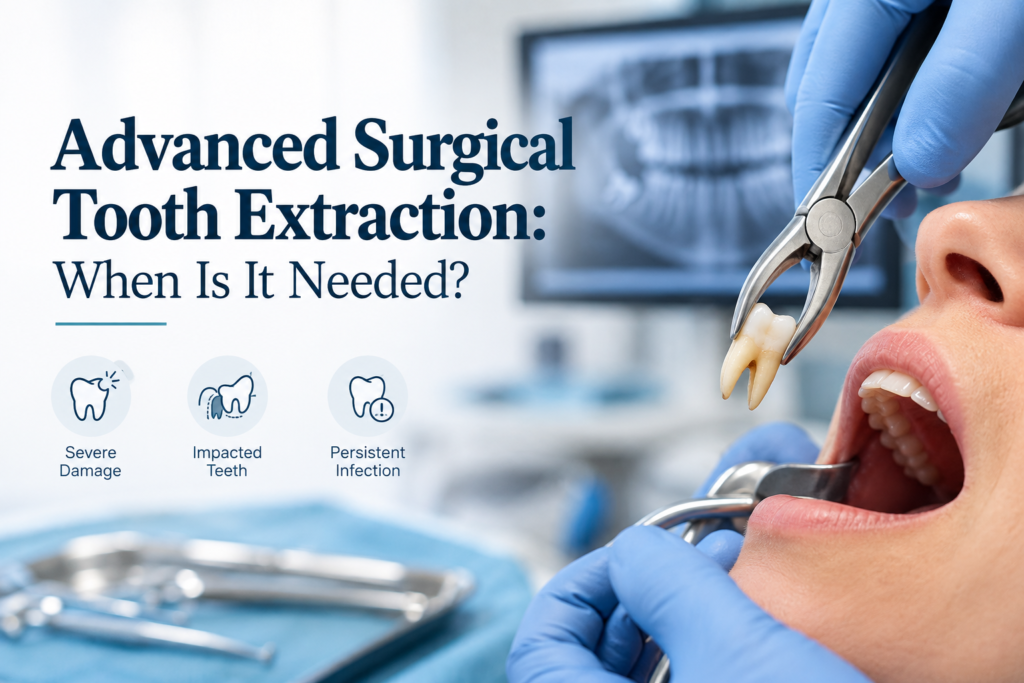
Most teeth can be removed using a straightforward extraction technique. However, some teeth are more difficult to remove because they are broken, impacted, severely damaged or positioned in a challenging way.
In these circumstances, your dentist may recommend an advanced surgical extraction.
At Millennium Dental Practice in Harringay, London, surgical procedures are among the regulated services provided at the practice. If you have a damaged or difficult-to-remove tooth, your dentist can assess the tooth and explain which treatment approach is appropriate.
What Is a Surgical Tooth Extraction?
A surgical extraction is a more involved procedure used when a tooth cannot be removed easily using a routine extraction technique.
Depending on the condition and position of the tooth, the dentist may need to make a small opening in the gum to gain access. In some cases, the tooth may need to be divided into sections before it can be removed safely.
The exact technique depends on the individual tooth and surrounding structures.
Why Might You Need Surgical Extraction?
There are several reasons why a surgical extraction may be recommended, including:
- A tooth that has broken below the gum line
- Severely damaged or decayed teeth
- Impacted teeth
- Teeth with complex or curved roots
- Limited access to the tooth
- Certain wisdom tooth cases
Your dentist will examine the tooth and may take an X-ray to assess its position, roots and surrounding structures.
What Happens Before the Extraction?
Before treatment, your dentist will explain the procedure and discuss any relevant medical or dental considerations.
Local anaesthetic is generally used to numb the area during the procedure. The dentist will carefully access and remove the tooth using the technique most appropriate for your particular situation.
If you are anxious about dental treatment, tell your dental team before the procedure so that your concerns can be discussed.
What Can You Expect Afterwards?
Some discomfort, swelling or tenderness can occur after a surgical extraction. Your dentist will provide specific aftercare instructions based on your procedure.
You may receive advice about eating, drinking, keeping the area clean and protecting the extraction site while it heals.
Following your dentist’s instructions carefully can support the healing process. If you experience symptoms that concern you after the procedure, contact your dental practice for advice.
When Should You See a Dentist?
A severely damaged, broken or impacted tooth should be assessed rather than left untreated. An examination allows your dentist to determine whether extraction is necessary and whether a routine or surgical approach is appropriate.
If you have been advised that you may need a surgical extraction, Millennium Dental Practice in Harringay can assess your dental needs and discuss the appropriate treatment options.
The practice is located at 41 Willoughby Road, London N8 0JG, serving patients in Harringay, Haringey and surrounding areas.
Frequently Asked Questions
Is surgical extraction different from a normal extraction?
Yes. Surgical extraction involves a more involved technique and may be required when a tooth cannot be removed easily using a routine extraction.
Will I feel pain during a surgical extraction?
Local anaesthetic is generally used to numb the treatment area. Your dentist will explain the procedure and what you can expect beforehand.
How long does recovery take?
Recovery varies depending on the tooth, complexity of the procedure and individual healing. Your dentist will provide personalised aftercare advice.